
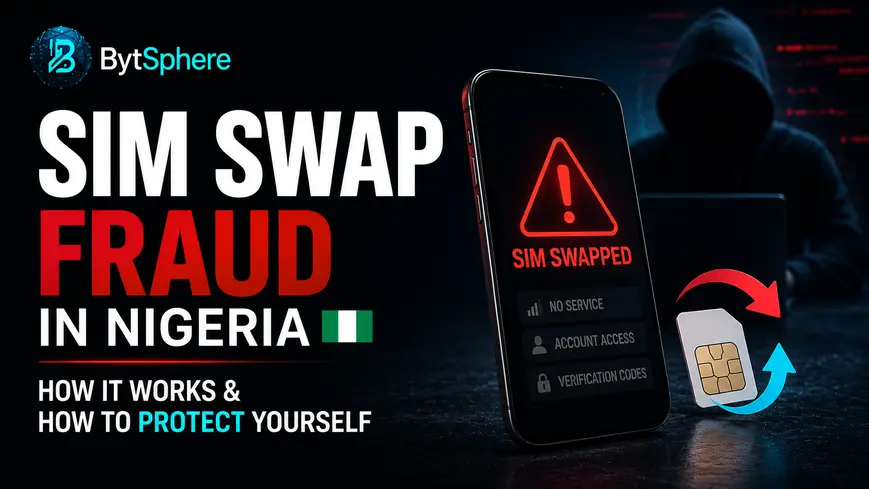
You don't need a hacker in a hoodie or sophisticated malware to lose everything in Nigeria's digital economy. Thousands of Nigerians wake up to find their bank accounts emptied or their phone suddenly dead — all because someone convinced a telecom outlet to transfer their number to a different SIM card.
📋 Table of Contents
- The Scale of the Problem in Nigeria
- How SIM Swap Fraud Actually Works
- Why Nigeria Is Especially Vulnerable
- Warning Signs You're Being Targeted Right Now
- The Truecaller & Recycled Number Risk
- What's Changing: The New TIRMS System
- 7 Real Ways to Protect Yourself
- What to Do If It Happens to You
- Frequently Asked Questions
This is SIM swap fraud, and it has quietly become one of the most damaging forms of cybercrime in Nigeria. It requires no technical hacking skill at all — just personal information, a bit of social engineering, and sometimes a bribed insider. This guide explains exactly how it works, why Nigeria is particularly exposed, and the concrete steps that actually protect you.
The Scale of the Problem in Nigeria
The numbers on SIM swap fraud in Nigeria paint a genuinely alarming picture — not just in scale, but in the direction things are moving.
| Statistic | Figure |
|---|---|
| Nigerian losses to telecom-related fraud, 2019–2023 | ₦12.5 billion (NCC) |
| Nigerian fraud losses in 2024 | ₦52.26 billion (~$32 million) — a 196% rise over 5 years |
| SIM swap-related bank fraud increase, 2022–2024 | 300% (Nigeria Inter-Bank Settlement System) |
| Fraud loss increase, Q1 2025 alone | 603% (while case count rose only 7.6%) |
| Nigerian banking sector fraud losses, 2025 | ₦25.85 billion (~$20 million) — down 51% year-on-year |
| Organised SIM swap syndicates identified in Nigeria | At least 17 (Kaspersky, 2024) |
How SIM Swap Fraud Actually Works
The mechanics are almost embarrassingly simple — which is exactly what makes this crime so effective. Here is the real, step-by-step process cybersecurity experts have documented:
- Step 1 — Data collection. A fraudster obtains your personal information: full name, phone number, date of birth, and sometimes your BVN or NIN. This data is disturbingly easy to acquire — through phishing links, data breaches, corrupt insiders selling databases, or simply scraping details you've shared on Facebook and other social media.
- Step 2 — The impersonation. The fraudster visits a mobile network operator's outlet (or contacts a call centre) claiming their SIM card is lost, stolen, or damaged, and requests a replacement. They may use a fake ID, or — more commonly — pay a telecom employee to skip proper verification entirely.
- Step 3 — The swap. Your phone number is transferred to the fraudder's new SIM card. Your phone goes dead — no signal, no calls, no texts. Their phone comes alive with your number, fully active.
- Step 4 — Full account takeover. Every password reset link, every two-factor authentication SMS code, every mobile banking OTP now flows directly to their phone. They log into your bank app pretending to be you — and because financial institutions only see a phone number, not a person, they treat the fraudster as the legitimate account owner.
- Step 5 — The drain. Within minutes, funds are transferred out. In some cases, fraudsters also apply for instant microloans using your identity — leaving you with unexpected loan collection calls for money you never borrowed.
Why Nigeria Is Especially Vulnerable
SIM swap fraud isn't unique to Nigeria — but several factors specific to Nigeria's digital infrastructure make it particularly dangerous here.
- Phone numbers are treated as identity. Nigerian banks, fintech apps, and digital wallets overwhelmingly rely on your phone number as the primary authentication channel — meaning controlling the number is functionally equivalent to controlling the account.
- Insider collusion at telecom outlets. Behind many SIM swap frauds is a collaborator inside the telecom firm — a customer service representative who skips verification steps or ignores document discrepancies, often for a bribe as small as ₦50,000.
- Fragmented identity systems. NIN, BVN, and bank APIs aren't fully synchronised across institutions, leaving loopholes fraudsters actively exploit.
- Low public awareness. Most Nigerians don't realise that losing signal on their phone unexpectedly could mean their bank account is being drained in real time, right at that moment.
- Cross-border loopholes. A phone number registered in Nigeria can sometimes be swapped at a retail outlet in a neighbouring country where verification standards differ, complicating enforcement.
- High reward-to-risk ratio for fraudsters. A corrupt telecom employee earning ₦50,000 to process a fraudulent swap can enable access to accounts holding millions — the economics heavily favour the criminals.
📱 You Might Also Like
Warning Signs You're Being Targeted Right Now
SIM swap fraud happens quietly and quickly — recognising the warning signs in the moment can be the difference between stopping it and losing everything.
| Warning Sign | What It Means |
|---|---|
| Sudden total loss of signal | Not a network glitch — your number may have just been transferred to another SIM |
| Unexpected "SIM replaced" SMS | A confirmation message for a swap you never requested |
| Unfamiliar debit alerts | Transactions you never made appearing on your bank statement |
| Calls from loan companies | Demanding repayment for microloans you never applied for |
| Locked out of email/social media | Password reset links sent to your (now hijacked) number changed your access |
The Truecaller & Recycled Number Risk
Here's a Nigeria-specific vulnerability most people have never considered. According to MTN Nigeria's Chief Corporate Services Officer, subscribers don't technically "own" their phone numbers in perpetuity — network operators lease number blocks, and subscribers essentially rent their lines as long as they keep using them.
If a line goes unused for 180 days, it gets quarantined and can eventually be recycled and reassigned to a new subscriber. This creates a genuine risk: widespread use of apps like Truecaller, which identifies unsaved callers, means that when your old number is reassigned to someone else, Truecaller may still display your name — because it retains cached contact data from when the number was yours. Fraudsters can exploit this outdated cached information, piecing it together with other data fragments to impersonate the previous or new owner.
What's Changing: The New TIRMS System
There is genuine, concrete progress on this front — and it's very recent. In April 2026, the Central Bank of Nigeria (CBN) and the Nigerian Communications Commission (NCC) signed a memorandum of understanding establishing the Telecom Identity Risk Management System (TIRMS).
TIRMS will allow banks and financial institutions to query, in real time, whether a phone number linked to a transaction has been recently swapped, reassigned, flagged for suspicious activity, or gone inactive — closing a critical gap that existing identity checks (like BVN-NIN integration) simply don't cover.
- What it fixes: Currently, BVN-NIN integration verifies who you are at onboarding, but does nothing to track whether the phone number tied to your account has since been compromised or swapped.
- How it works: The platform aggregates real-time data from MTN, Airtel, Glo, and 9mobile into a single regulator-backed system that licensed banks and fintechs can query before approving high-risk transactions.
- The catch: As of mid-2026, implementation details — including a live go-date and published API specifications — have not yet been finalised. CBN Governor Olayemi Cardoso has committed to a Q3 2026 target for a public implementation roadmap.
7 Real Ways to Protect Yourself
While systemic fixes like TIRMS are still being rolled out, here are concrete actions you can take today to significantly reduce your own risk:
- Use an authenticator app instead of SMS OTPs where possible. Apps like Google Authenticator or Microsoft Authenticator generate codes on your device, not via SMS — meaning a SIM swap cannot intercept them. Enable this on any account that offers it.
- Register a unique email address for banking — separate from the email linked to your social media accounts, which are more vulnerable to phishing and easier for fraudsters to compromise.
- Limit what you share publicly on social media. Fraudsters routinely harvest names, phone numbers, dates of birth, and even implied BVN details from public Facebook profiles and carelessly leaked databases. Review your privacy settings today.
- Enable transaction alerts across multiple channels — SMS and email, not SMS alone. If your SIM is swapped, an email alert may still reach you even after your phone goes dead.
- Set low default transaction limits on your banking apps, and only raise them temporarily when you specifically need to make a large transfer. This limits the maximum damage in the event of a successful swap.
- Never confirm identity details to unsolicited callers. Any call or message asking you to "verify your account" or "confirm your BVN" urgently should be treated with suspicion and verified directly through your bank's official customer care line — never through a number provided in the suspicious message itself.
- Monitor your line's status periodically. If you haven't used a secondary SIM in a while, check that it's still active under your name. A dormant line for 180+ days risks quarantine and eventual reassignment.
What to Do If It Happens to You
If you notice the warning signs described earlier, speed is everything. Here's the exact sequence to follow:
- Do not wait or assume it's a network fault. Immediately check your bank app on another device — a browser, a family member's phone, anything with internet access.
- Contact your bank immediately to freeze your account and halt any pending or in-progress transactions.
- Notify your telecom provider using an alternative phone number to report the unauthorised SIM swap and request the line be restored to your control.
- Report the incident to the Nigeria Police Cybercrime Unit (NPF Cybercrime Unit) or the Economic and Financial Crimes Commission (EFCC).
- Change all passwords and security questions across every account linked to that phone number — email, social media, banking, everything — once you regain access.
- Be prepared for a slow process. Recovery is rarely immediate and may require physical presence at your bank or telecom outlet for identity re-verification. Document everything for your case file.
Have you or someone you know experienced SIM swap fraud in Nigeria? Share your experience in the comments — it could help another BytSphere reader recognise the warning signs in time.
Stay tuned to BytSphere for more cybersecurity guides made for Nigerians.
Frequently Asked Questions
How do I know if I've been a victim of SIM swap fraud?
The clearest sign is a sudden, complete loss of phone signal with no explanation — no calls, texts, or mobile data, even after restarting your phone. This often means your number has been transferred to another SIM card. Other signs include receiving an unexpected "SIM replaced" confirmation SMS you never requested, unfamiliar debit alerts on your bank account, being suddenly locked out of email or social media accounts, or receiving calls from loan companies about loans you never applied for. If you notice any of these, check your bank account from another device immediately and contact your bank and telecom provider without delay.
Can SIM swap fraud happen even if I never share my BVN or NIN?
Yes, though sharing less sensitive information reduces your risk. Fraudsters can piece together enough personal information — your full name, phone number, date of birth, and address — from data breaches, social media profiles, or corrupt telecom insiders, without needing your BVN directly. Once they control your SIM, they can often reset banking app passwords using standard "forgot password" flows that only require access to your phone number, not your BVN. This is why limiting what you share publicly on social media and using authenticator apps instead of SMS-only verification matters significantly.
Is my money safe once a fraudster swaps my SIM?
Not automatically — but speed matters enormously. Once a fraudster controls your SIM, they can typically access banking OTPs, reset passwords, and initiate transfers within minutes. However, if you notice the signal loss immediately and act fast — freezing your account through your bank's app or hotline before the fraudster completes their transactions — you can often prevent or limit the damage. Setting low default transaction limits on your banking apps also caps the maximum amount that can be moved even if a swap succeeds.
What is TIRMS and how does it help protect Nigerians?
TIRMS (Telecom Identity Risk Management System) is a new platform launched via an April 2026 agreement between the Central Bank of Nigeria and the Nigerian Communications Commission. It allows banks and financial institutions to check, in real time, whether a phone number involved in a transaction has recently been swapped, reassigned, flagged for suspicious activity, or gone inactive. This closes a gap that existing BVN-NIN identity verification doesn't cover — verifying the person at onboarding, but not the ongoing integrity of their phone number. As of mid-2026, the system's full rollout details and go-live date are still being finalised, with a public implementation roadmap expected by Q3 2026.
Should I use SMS OTP or an authenticator app for my Nigerian bank account?
Wherever your bank offers the option, an authenticator app (like Google Authenticator or Microsoft Authenticator) is significantly more secure than SMS-based OTP. Authenticator apps generate codes directly on your device without relying on your phone network at all — meaning a SIM swap attack cannot intercept them. SMS OTPs, despite being widely known as vulnerable to SIM swap interception, remain the default in most Nigerian banking apps because of convenience and lower implementation cost. Check your bank's security settings menu for a "two-factor authentication" or "authenticator app" option and enable it if available.
Can a dormant or inactive SIM card put me at risk?
Yes. Nigerian telecom operators quarantine lines that go unused for 180 days, after which the number can eventually be recycled and reassigned to a new subscriber. If you're holding an old, inactive SIM you assume is "safe" simply because it's not in use, understand that it can eventually be given to someone else — and apps like Truecaller may still show your old name against that number due to cached data, creating confusion and potential impersonation risk. If a number is important to you, keep it active, or formally deregister any accounts still linked to it.